
Controlling recoil is one of the most important skills in Call of Duty: Warzone. While attachments can help stabilize weapons, true mastery comes from mechanical precision and understanding weapon behavior. In 2025’s fast-paced Warzone, where balance patches frequently adjust recoil patterns, relying purely on attachments is no longer enough. Players who can manage recoil naturally hold the advantage in every firefight.
This guide teaches you how to master recoil control without relying on attachments—focusing on practical techniques, in-game awareness, and training methods that turn every gun into a reliable tool of precision.
Understanding Weapon Behavior
Each weapon in Warzone follows a unique recoil pattern—a combination of vertical climb and horizontal sway. Learning how your gun behaves over time is the first step toward control. Go to the firing range and hold down the trigger to watch the bullet spread. Pay attention to direction and consistency; most patterns repeat predictably.
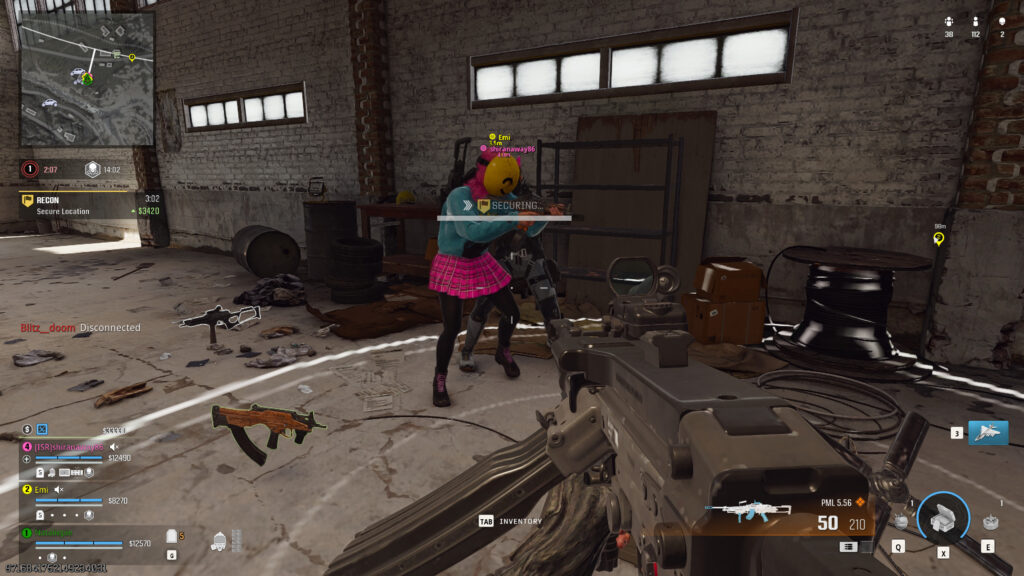
Once you understand your weapon’s behavior, your goal is to counter it manually with opposite directional movement on your input device—slightly pulling down or to the side as needed.
Mouse and Controller Techniques
On mouse and keyboard, recoil control relies on small, consistent hand movements. Lower your sensitivity slightly and use your arm, not just your wrist, for smoother adjustments. For controller players, fine-tune your aim response curve and deadzones until movement feels steady and predictable. A smooth thumbstick motion is more effective than overcompensating bursts.
Regardless of platform, muscle memory is key—practice small bursts first before attempting full-auto sprays. The more consistent your motion, the less dependent you become on attachments.
Short Bursts vs. Full Auto
Firing in short, controlled bursts drastically improves accuracy. Even without attachments, burst control limits horizontal spread and helps maintain focus on target tracking. For longer fights, alternate between two- to four-shot bursts, resetting your aim between them. This prevents recoil buildup and preserves ammunition efficiency.
Full-auto fire should be reserved for close-range encounters where recoil patterns matter less and reaction speed takes priority.
Positioning and Movement Influence
Many players underestimate how stance affects recoil. Crouching or going prone significantly reduces vertical climb, while shooting while moving increases instability. When holding long-range angles, crouch and fire in bursts for maximum steadiness. In close quarters, rely on strafing instead of spraying to offset incoming damage without losing aim control.
Good positioning minimizes the need for recoil compensation—your angles and cover do half the work for you.
Weapons That Reward Natural Control
Some Warzone weapons are easier to master without attachments due to their predictable patterns. The **MCW**, **Holger 556**, and **BAS-B** stand out for their manageable recoil and strong mid-range presence. Meanwhile, SMGs like the **Striker 9** and **WSP-9** favor quick bursts, perfect for players learning manual tracking.
The table below lists beginner-friendly weapons ideal for natural recoil practice:
| Weapon | Category | Recoil Pattern |
|---|---|---|
| MCW | Assault Rifle | Slight vertical climb, minimal sway |
| Holger 556 | Assault Rifle | Smooth, predictable rise |
| BAS-B | Battle Rifle | Slow vertical kick, heavy damage |
| Striker 9 | SMG | Low recoil, high mobility |
Training Routines and Drills
Recoil control can be trained like any other mechanical skill. Spend time in Warzone’s practice range firing at walls, then adjust your reticle until bullet holes stack closely. Transition to moving targets, applying light downward correction as you strafe. Finally, simulate real combat—engage enemies at various ranges to test consistency under pressure.
Consistency builds confidence, and confidence wins fights—even without perfect setups or attachments.
Conclusion
Mastering recoil without attachments is about discipline, awareness, and control. By learning your weapon’s behavior, refining your aim technique, and practicing deliberately, you’ll develop true mechanical skill that no patch can nerf. Attachments amplify good fundamentals—they don’t replace them.
With patience and repetition, you’ll turn any gun into a laser beam—because control isn’t bought at a Buy Station; it’s earned through mastery.
Leave a Reply